The Real Cost of Living in Thailand: About $1k a Month
Let me get straight to it, because that's what you came for. For a single person, the cost of living in Thailand runs around $1,000 a month for a comfortable lifestyle. Some guys do it for less. Plenty do it for a little more and live like kings.
On a grand a month you cover your apartment and your groceries and still have a few hundred dollars left over for having fun. Many expats out here run exactly this math. And I don't ask you to take it on faith: I photograph the menus and price tags, like this stir-fry page where dinner runs 80 to 150 baht.
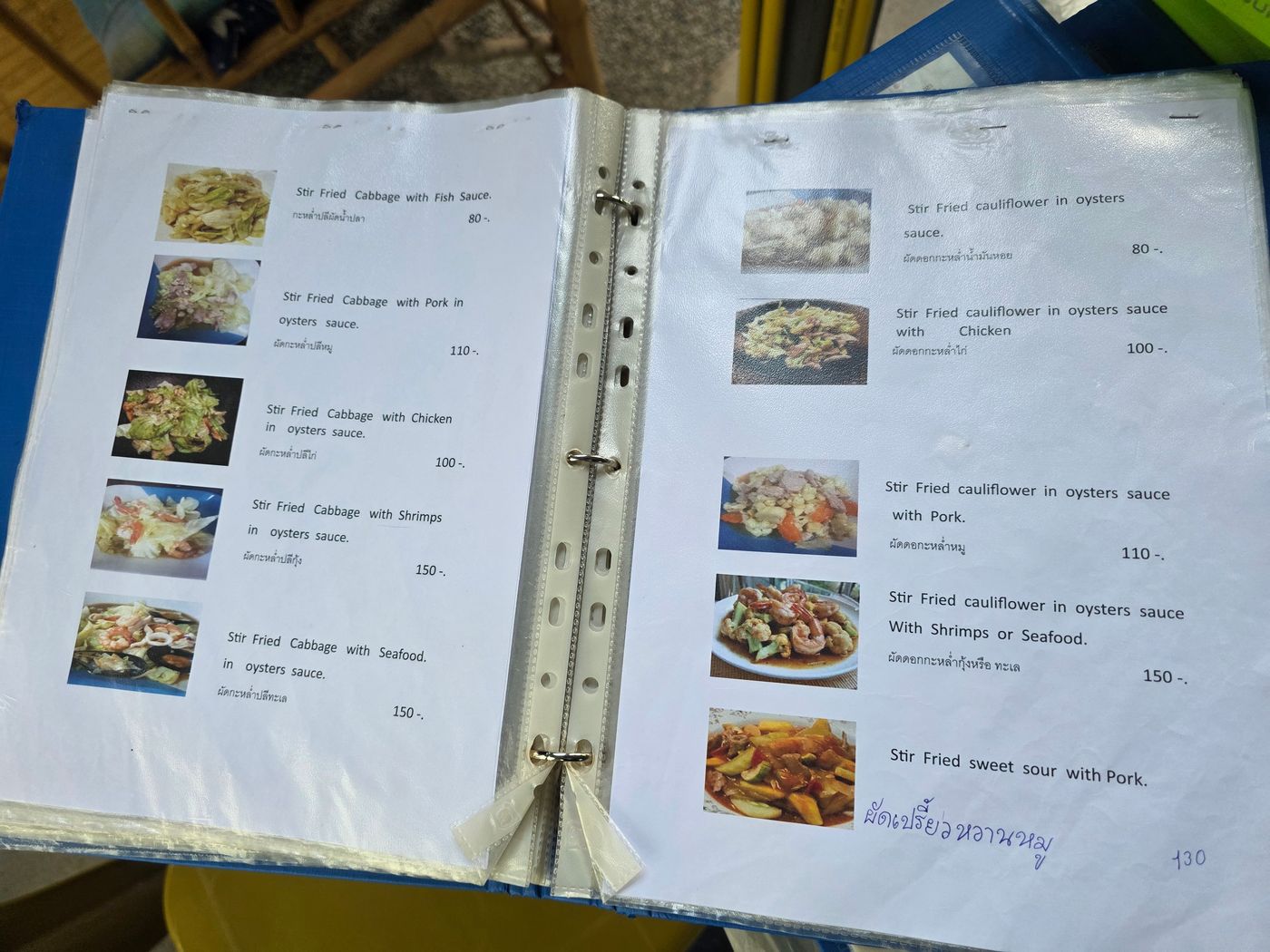
What a grand a month actually buys
That's not a tourist surviving in a hostel. That's a real life. Your own place, eating out most days, weekly massages, a motorbike to get around, fast internet access, the works.
The floor and the ceiling
Two honest guardrails on that number. First, the "$300 a month in Thailand" thing the course-sellers push? A myth. Nobody's living a life you'd actually want on a bag of 7-Eleven peanuts. That is the one number that makes the cost of living in Thailand look fake.
Second, it scales the other way too: the cost of living in Thailand also has a ceiling. Across Southeast Asia, somewhere around $1,300 to $1,800 a month has you living like a king, and at $3,000 to $5,000 you're a boss king. The floor is real, but so is the ceiling.
For perspective, the average income in Thailand is only about $200 a month, and I've watched people living on $30 a day out here who are some of the happiest people in the world. The country is built for life to be affordable. You're just showing up with dollars.
Now compare that to what your $1,000 does in America. Maybe it covers half your rent. Out here it covers your entire life. That's the part that breaks people's brains the first time they see it. It's like I always say. Making $25 an hour online feels like $80 an hour when your rent is $300. I broke that whole mechanism down in geoarbitrage.
Where Your Monthly Expenses Go Living in Thailand
Let me walk you through the everyday expenses so you can build your own monthly budget. Your city, your taste, and your discipline all change the math. But here's the honest shape of it, bucket by bucket, straight from places like this one.
Housing costs: your biggest lever
A clean studio or one bedroom apartment in a smaller city, or on the outskirts of Pattaya or Chiang Mai, goes for a fraction of a US apartment. In my own math, the condo line is about $400 a month. Bangkok in the nice city center spots costs more, but rent prices even there are nowhere near American big-city numbers.
Want to spend less? Go a little outside the tourist core, where average rent drops fast. Want to flex with more space? You can do that too, and it still won't wreck you.
Food: where Thailand spoils you
Street food and local spots are genuinely cheap and genuinely good. You can get a really good Thai dish for around 65 baht, about two bucks, even in the bigger cities. I grabbed a burger the other day for 95 baht, around $3. A gigantic doner sandwich ran me 160 baht. Fresh fruit smoothies that cost you $5 back in the States are more like a dollar or two here. And a 10 or 20 baht tip makes somebody's day.
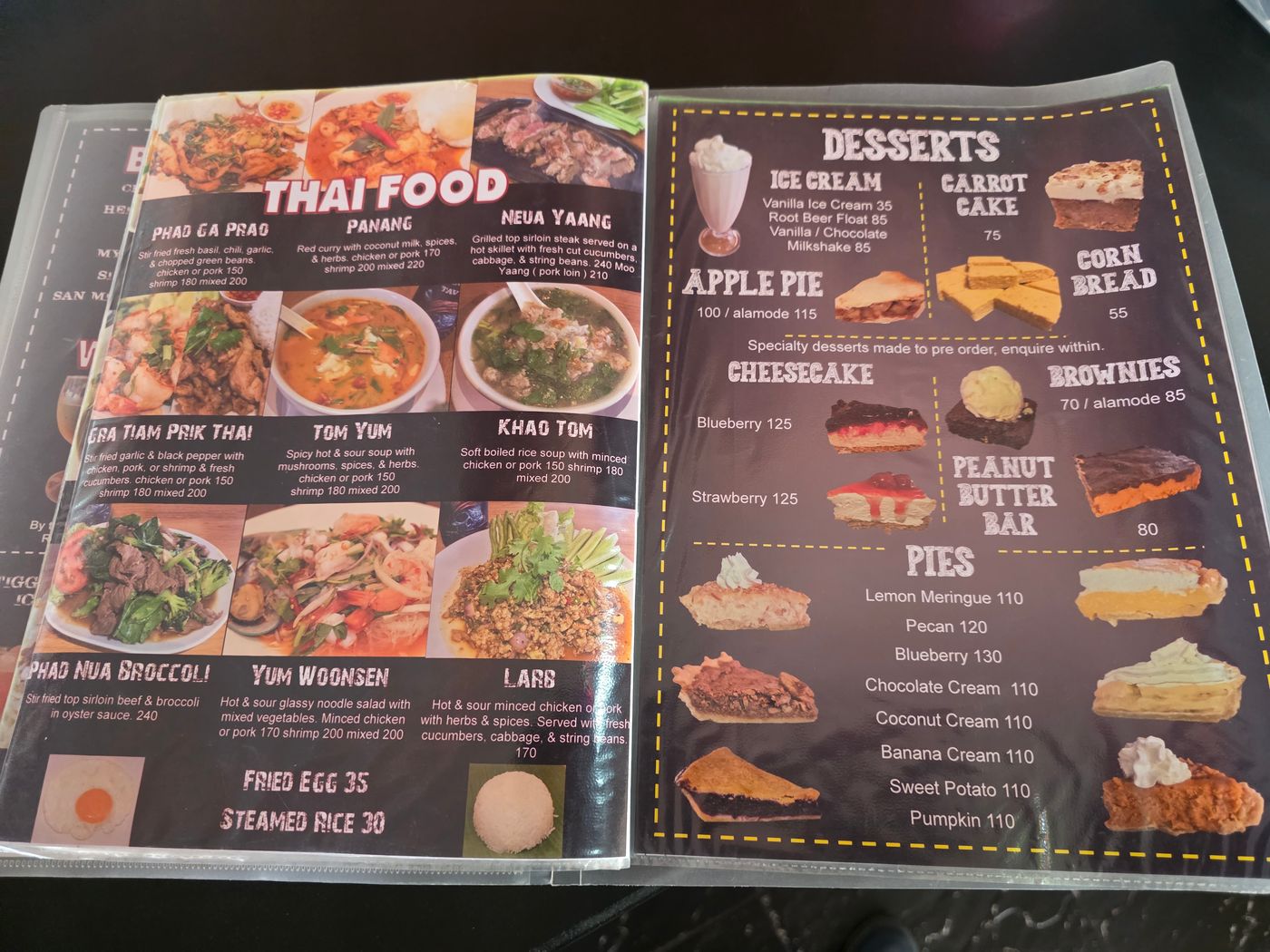
The western food test
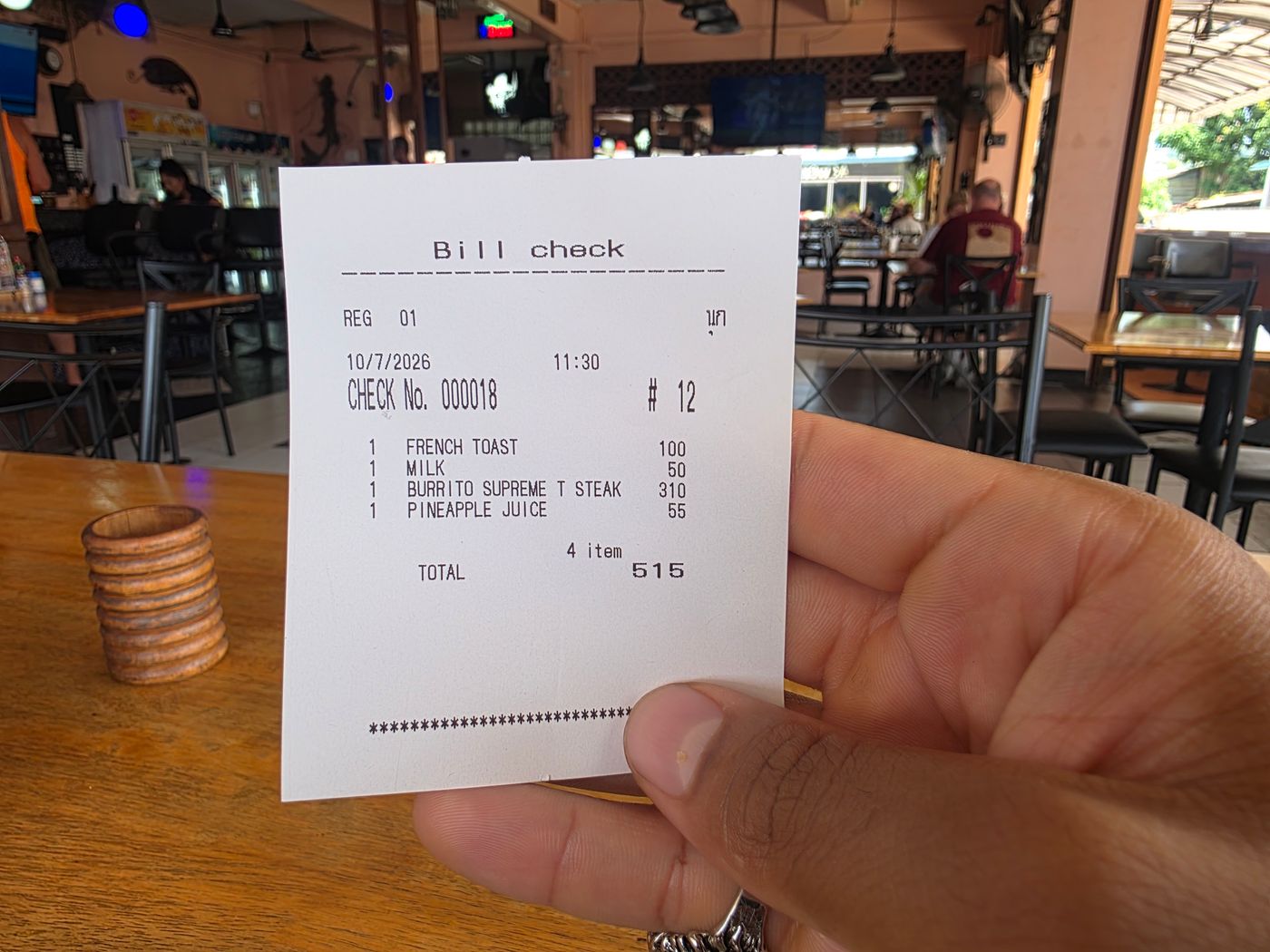
Don't take my word for it, I photograph this stuff. On the same menu, the Thai classics (phad ga prao, tom yum) run about 150 baht, around four bucks, while the western mains sit at 215 to 310. Even going full western barely hurts: my whole sit-down lunch (a steak burrito, French toast, milk, and a pineapple juice) rang up at 515 baht, about $14, and I kept the bill.
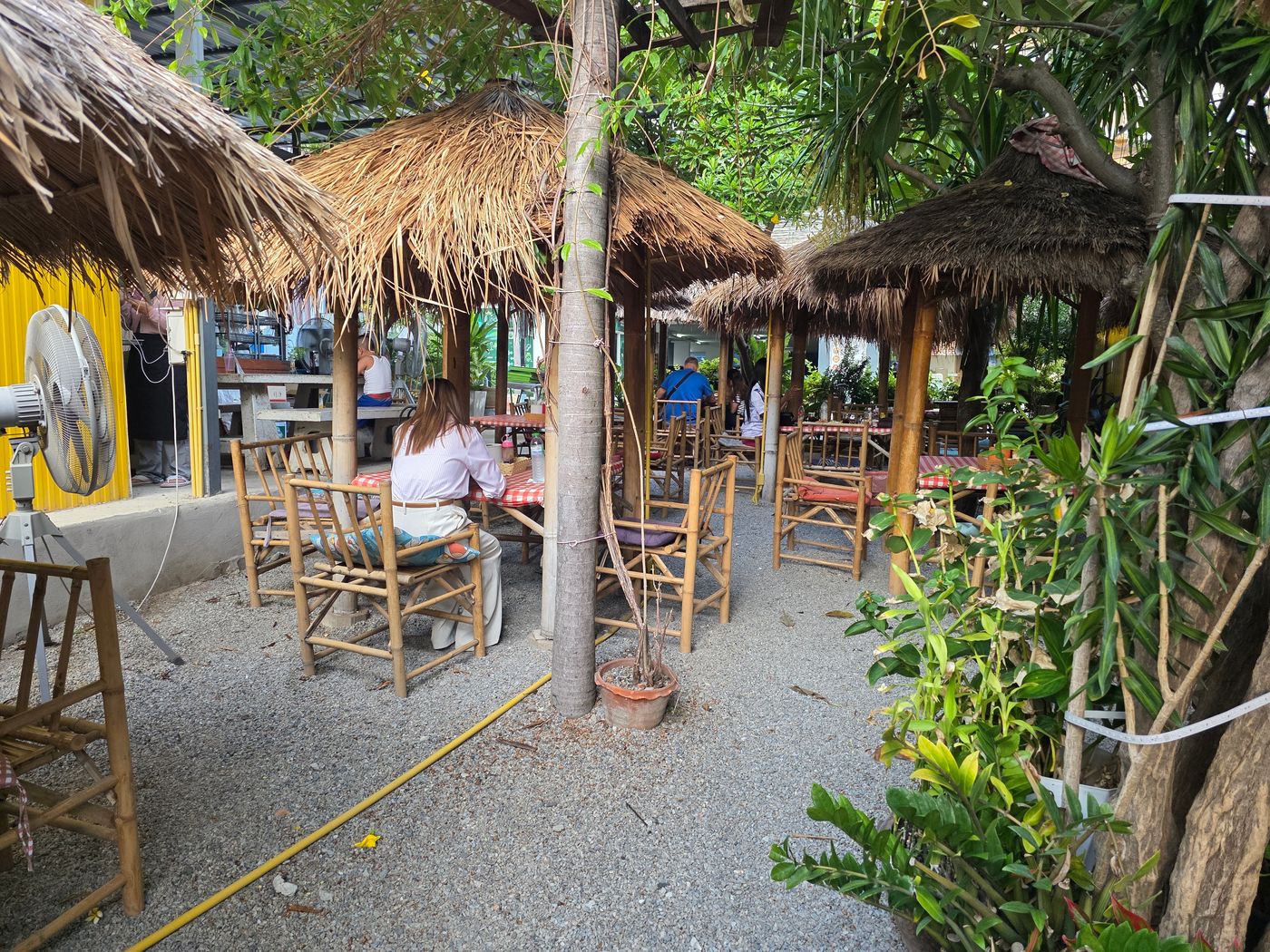
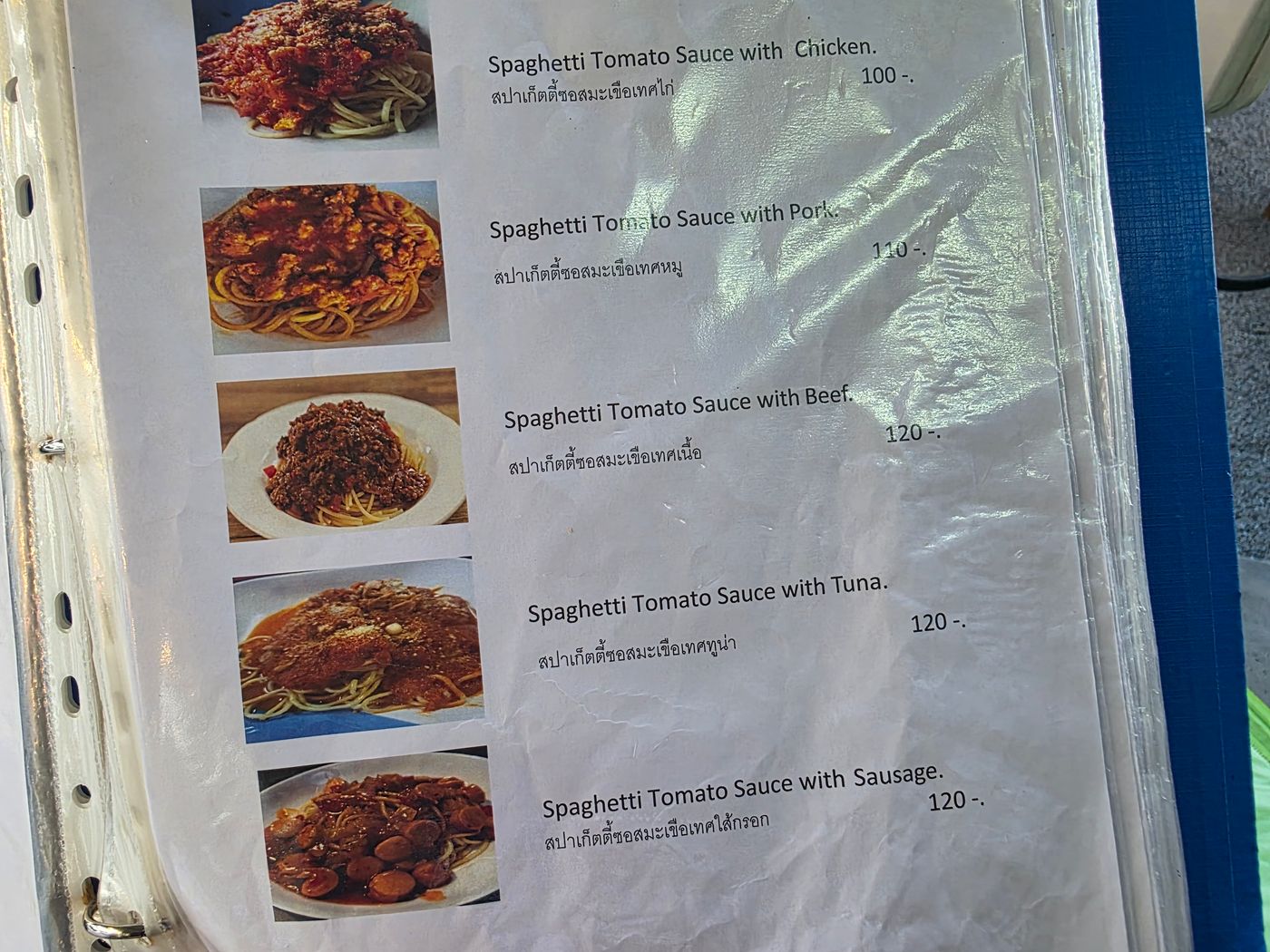
Same test at the garden spot with the thatched huts, an inexpensive restaurant in every good sense. Spaghetti with chicken is 100 baht (about $2.75) and beef is 120. The Thai pages of the same menu run 80 to 150 baht a dish. A western plate for three bucks. I ordered it and photographed everything.
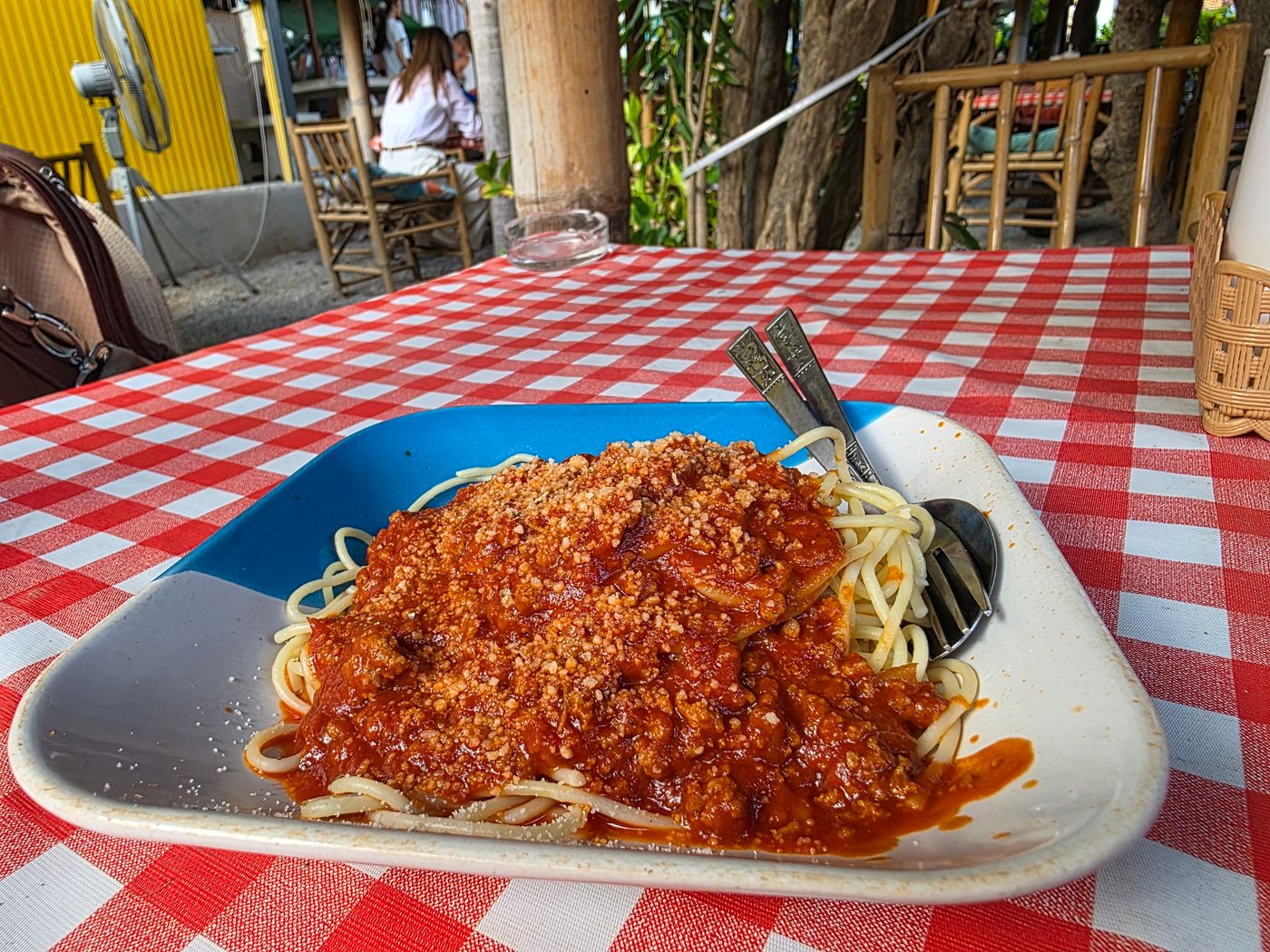
The grocery run, receipts included
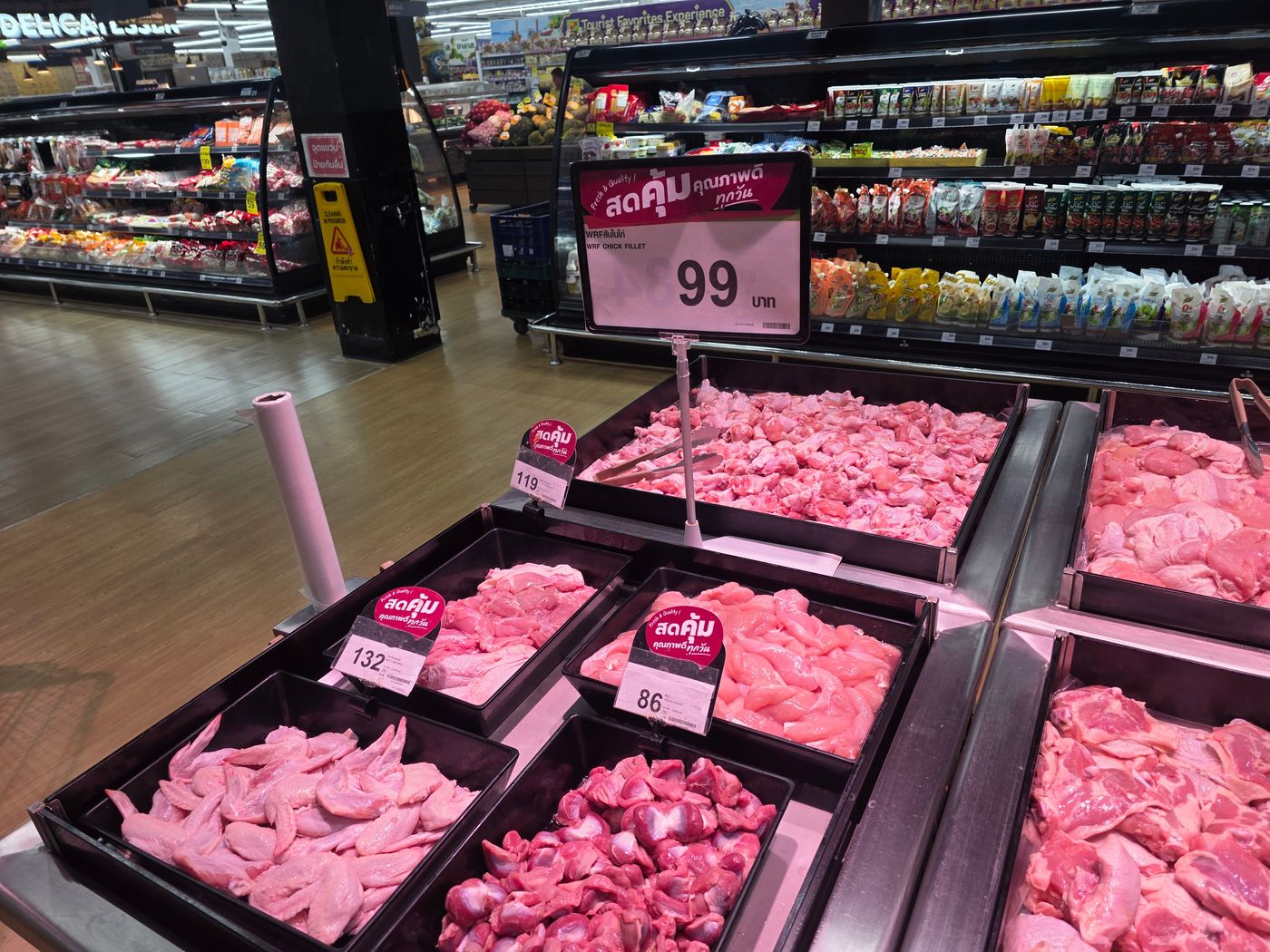
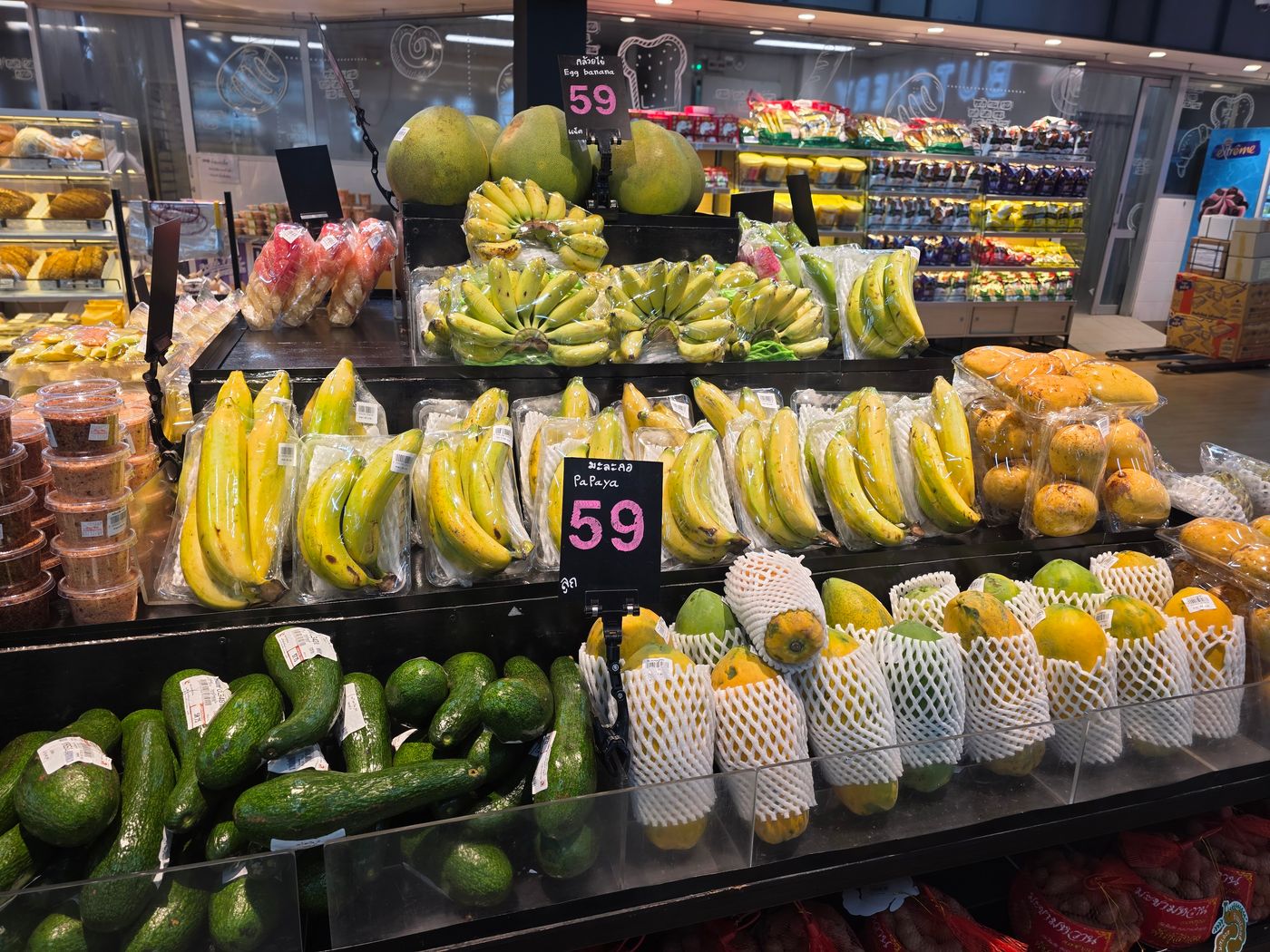
Groceries are the same story. My real hauls from the local markets and the supermarket land anywhere from under $30 to about $100 for a full week of fruit, vegetables, meat, and fish, depending on how heavy I go. On my last supermarket run I photographed the tags: chicken fillet at 99 baht a kilo (my bag, just over 2.6 kilos, rang up at 259 baht, about $7), a full kilo of frozen mixed vegetables for 59 baht, and bananas and papaya at 59. I eat a lot of protein and my food bills still stay tiny.
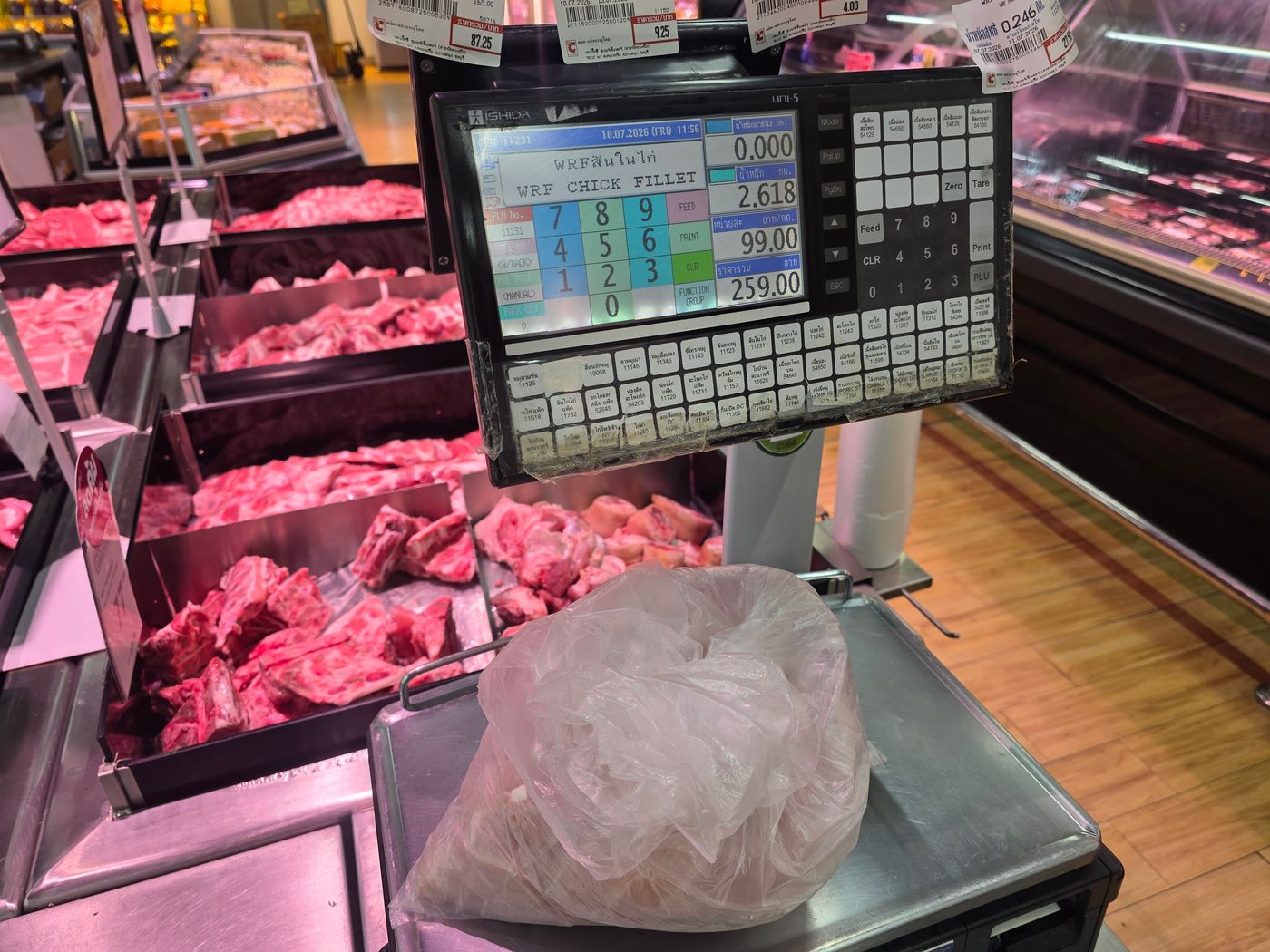
And if you prefer cooking at home, the produce aisle is where the low cost of living really shows: whole trays of fruit with price flags starting at 39 baht.
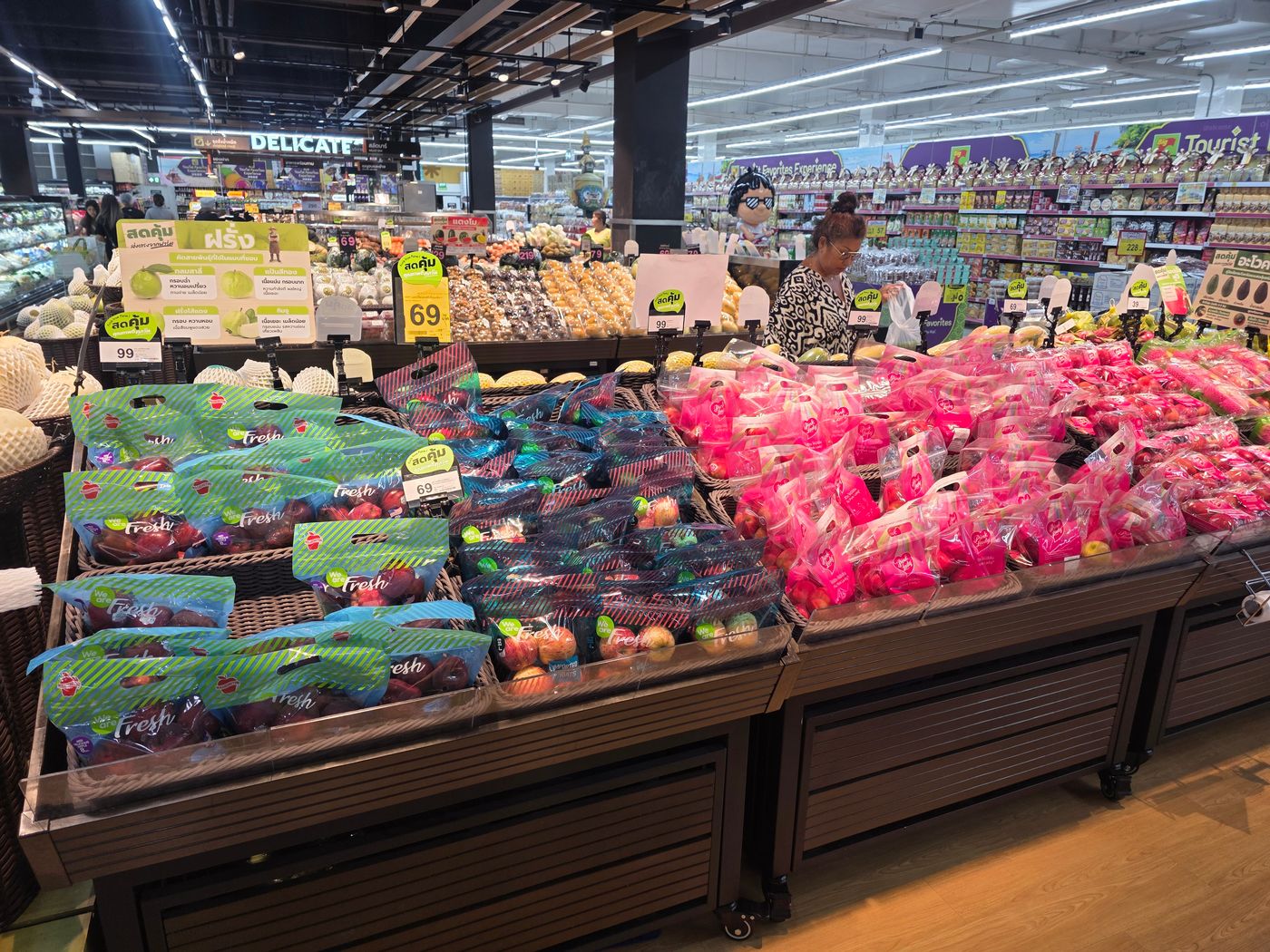
When I want to splurge on the famous French toast at a fancy cafe by the beach, I do, and it's still cheaper than a normal dinner back home. Eat local pad thai from the street food stalls and it's almost nothing. Eat Western every meal and it climbs, but it never gets American-stupid.
Getting around: motorbikes, baht buses, public transport
You get around on a motorbike, and it's dirt cheap. No car payment, no insurance shakedown, no fuel prices bleeding you dry. The kind of cross-town trip that would gouge you in rideshares back home barely registers here.
In the bigger cities, public transport picks up the slack: Bangkok runs real public transit, and Pattaya's baht buses loop the city all day. I won't quote you a one way ticket or a monthly pass price, because I don't ride them enough to photograph it. Price it locally when you land; it'll be a rounding error in your monthly bills either way.
Fun, health, and the rest
Massages, gym, going out, your snack fest at 7-Eleven. This is the stuff that costs a fortune in America and costs almost nothing out here. That's the geoarbitrage in action: you're earning at one level and spending at another.
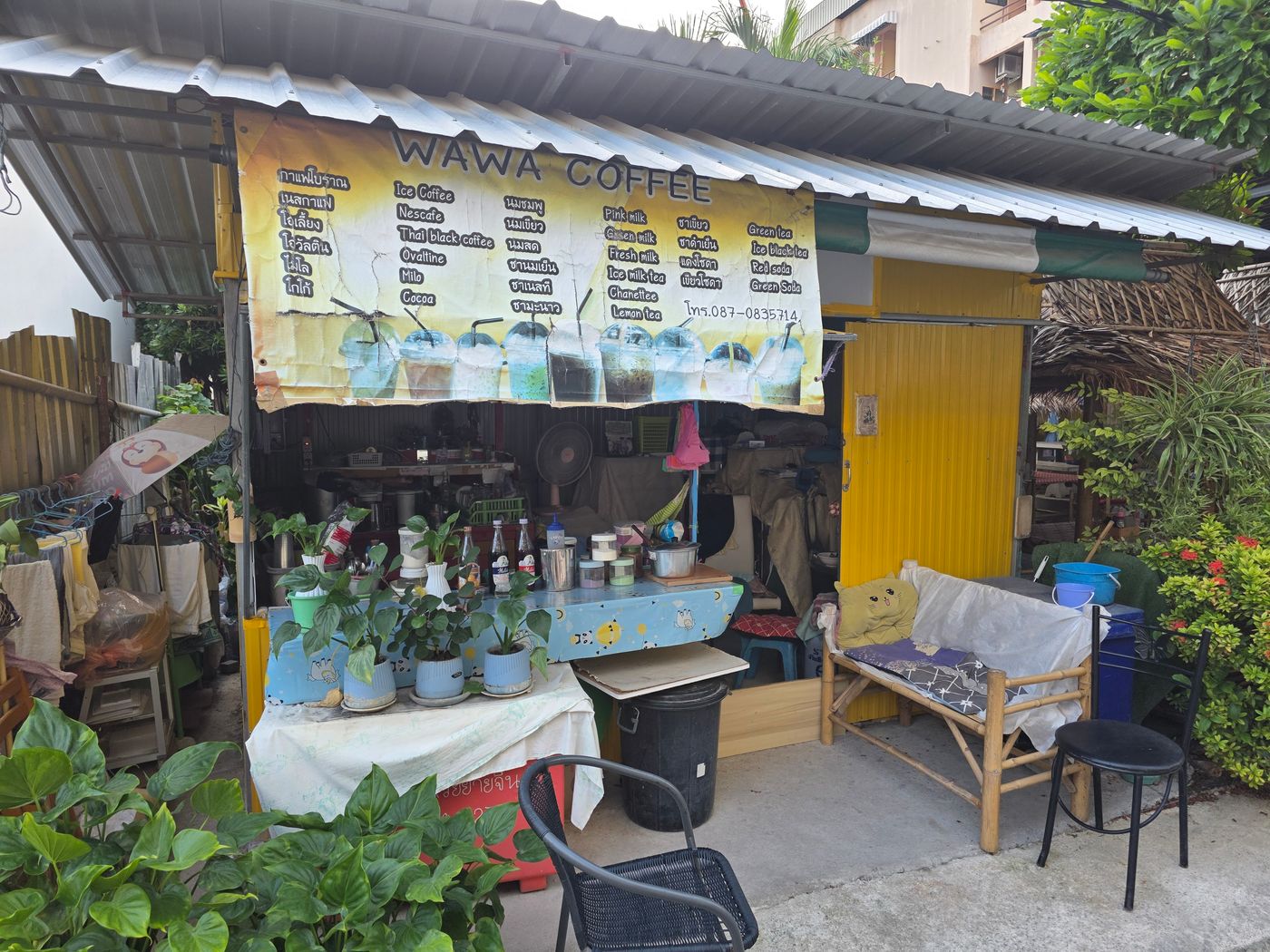
The little everyday expenses follow the same rule. Street stalls like this one are why fresh drinks cost a dollar or two instead of five.
Two grown-up line items to plan for. Budget something for health insurance, because being covered out here is part of doing this right. And leave room for your visa requirements, whichever route you take. Neither one changes the big picture, they just belong in the plan.
One more heads up from living here, not reading about it. Thailand runs on cash and Thai baht way more than you'd expect. In China everything went digital years ago, scan your phone and you're done (I broke down the cost of living in China separately, and put the two side by side in China vs Thailand). Out here a lot of spots, including the street vendors, only take cash, so it's easy to lose track of what you're spending. Track it for your first month or two so you actually see your number instead of guessing.
My Real Monthly Budget: Estimated Monthly Costs
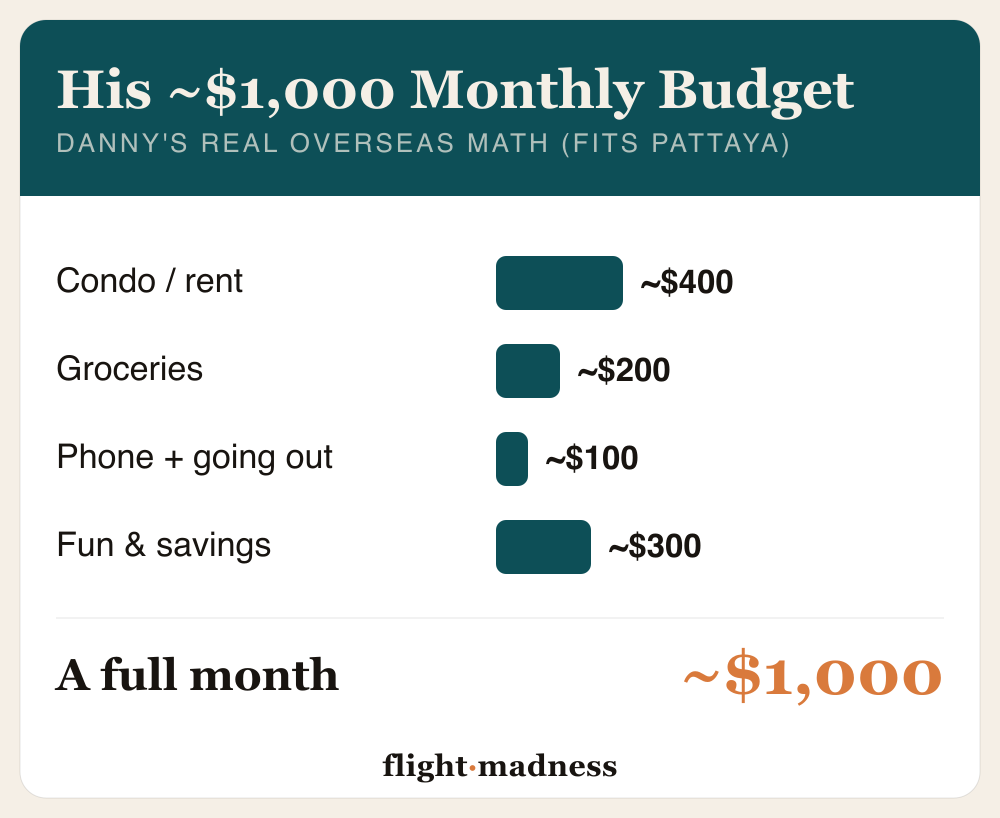
Here's how that grand actually splits up, using my own overseas math. It's the framework I run, and it fits a smaller Thai city like Pattaya. Say your condo runs about $400 a month. Groceries land around $200, and I eat a lot of protein, so figure roughly $50 a week (my last big Pattaya grocery run was $80 for a whole week of fruit, veg, meat, and fish). Another $100 or so covers your phone bill and going out. That still leaves you around $300 a month for fun, hobbies, or stacking savings.
Protein is why my grocery line works: the chicken tags at my supermarket run 86 to 132 baht a kilo, and I photographed the counter to prove it.
That's not scraping by. That's a full life with money left at the end of it. And here's the wild part: people living overseas on $2,000 a month are living a higher-quality life than plenty of folks pulling multiple six figures back in America. The number isn't the story. What the number buys you is.
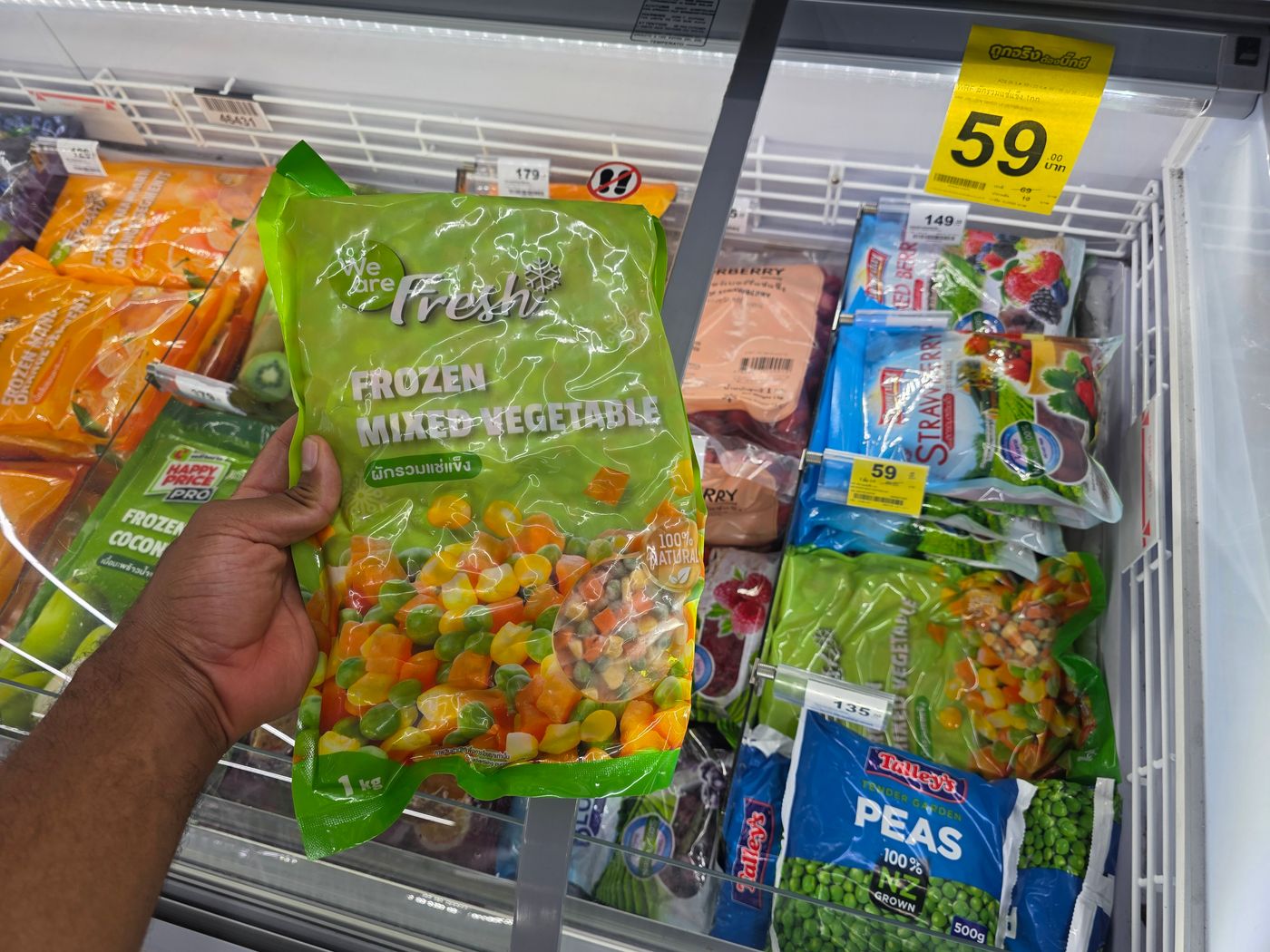
Stack prices like those for a month and here's the shape my spending actually takes.
Which Thai City Sets Your Number
The cost of living in Thailand depends on where you park yourself, same as anywhere. The Thai cities all run cheap compared to home, but rent swings a lot between them, and rent is what really sets your monthly number. Here's how the main ones stack up.
Bangkok: the expensive one
Bangkok is the big, expensive city of the bunch: a huge capital where the flashy city center costs real money, though still cheaper than a big American city. Most expats don't actually need Bangkok, they just default to it. If you want the big-city buzz, that convenience is what your extra rent buys.
Pattaya: where I am
I'm in Pattaya, a couple hours out: smaller, by the water, and my money goes further than it would in the capital. Same street food, cheaper rent. It's the trade most guys should actually make.
Chiang Mai: the nomad magnet
Chiang Mai up in northern Thailand runs at a slower pace and has been a digital-nomad magnet for years, because the costs sit low and the culture is rich. If your income comes off a laptop, plenty of expats seeking a cheap, easy base land here first.
Hua Hin and the smaller towns
Hua Hin gives you the beach-town version of the same deal, and islands like Koh Samui do too, though the touristy beach spots can nudge prices back up. And the smaller towns beyond those? Your baht stretches furthest of all, if you're OK with fewer Western comforts.
Here's the honest rule of thumb: the further you get from the tourist core of a big city, the lower the housing costs, and rent is the bucket that moves your whole month. Everything else, the street food, the motorbike, the massages, stays cheap just about wherever you land. So pick your city by the life you want, then let the rent line follow. Wherever you land, this is the kind of menu math you're working with:
What I'm Not Counting in This Budget
Quick honesty check, because cost-of-living guides love to blur this. My numbers are a single person's budget, built from my own receipts and my own lifestyle choices. That's the math I can prove.
The costs I'm leaving out
What I'm NOT budgeting here: a family setup with kids, annual tuition fees at international schools, buying property, or upgrading to a three bedroom apartment in a Bangkok tower. Those are real costs for the people who need them, and they're a completely different budget from mine. What I AM counting is normal single-guy groceries, including the slightly fancy stuff, like frozen berries at 179 baht a kilo.

If that's your situation, use my numbers as the baseline for what daily life costs, then price the family layer separately. For the single guy this site is written for, the receipts above are the honest picture.
What You Need Coming In Before You Move
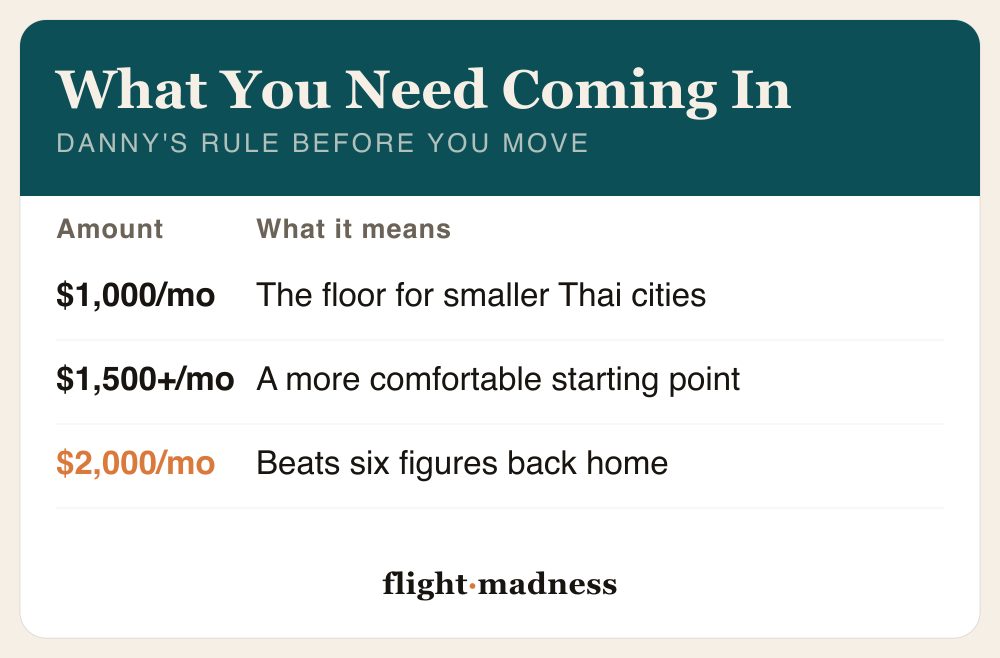
People ask the wrong version of this question. It isn't "how cheap is Thailand," it's "how much do I need coming in before I go." My honest rule: have at least $1,000 a month in income lined up before you move to a smaller Thai city like Pattaya. That's the floor. Around $1,500 a month or more is a more comfortable starting point. For me, the day I crossed that thousand-a-month line was the day I knew I could leave the States for good.
Why the low bar is real
Hit that bar and Thailand stops being a fantasy and starts being a plan. Fall short and even a cheap country will grind you down, same as anywhere. The whole game is showing up with a way to make money. And the bar really is low: when bananas and papaya cost 59 baht, the floor sits lower than your American brain expects.
Get the income sorted and everything on this page gets easy.
Want My Free Asia Checklist?
Grab my free Asia Travel Checklist so you know exactly what to line up before you go. It's the same prep I'd hand a guy getting ready to make the jump.
Free checklist. Real information, not hype. Unsubscribe anytime.
"But Don't You Need a Big Bank Balance Now?"
Every single week somebody shows up in my livestream panicking. "Bro, I heard Thailand is cracking down, I heard you need some big number in the bank, I heard they're kicking broke expats out."
Money you show vs money you spend
Let me clear this up. The scary number people keep repeating is a bank-balance requirement for certain visas. It's money you show in your account to qualify, not money you burn every month to survive. Big difference.
And the crackdown? They're getting strict with broke people. If you've got your money right, you either get your visa through a job or you handle it through the proper channels, and you breeze through. The news shows you the scary headline because bad news is what makes you click. Reality is way more boring and way more doable.
So no, you don't need to be rich to live here. You need to not be broke and not be sloppy with your paperwork. Those are two very different things. (If a clean exit from the States is what's stopping you, I laid out the path in how to move to another country.)
Here's the Part That Actually Matters
You can have the cheapest cost of living on the planet and it means nothing if you've got zero coming in. A low number only works if you've got a way to cover it.
That's the whole reason I push English teaching so hard. It's the closest thing to a cheat code Americans have. You land a job, you get overseas, and a teaching salary out here comfortably covers a Thailand cost of living with room to spare. I've got a client who just landed a teaching job out here. His pay covers his life, they handled his visa, and he's got free time left over to build whatever he wants.
Online teaching pays even better per hour, and it goes anywhere you do. Stack that kind of income against a $1,000-a-month life and you see why I never shut up about it. (If you want the Thailand-specific version, read teach English in Thailand.)
And here's what nobody warns you about, in a good way. Once you're actually on the ground, opportunities show up that you can't even see from your couch in America. While I was filming that livestream I bumped into a young guy selling his own dried fruit brand, famous on Instagram. I've done modeling, painting, content, all kinds of side hustles I never planned, because being a foreigner out here is its own kind of leverage. Teaching gets you in the door. The low cost of living buys you the runway. The rest you build once you're here.
I came out here with over $17,000 in student loan debt and barely anything in savings. Teaching wiped that debt out fast, because when your cost of living is this low, your money finally gets to do something other than survive. That's not luck. That's design.
Want to Run Your Actual Number With Me?
If you're doing the math and it's starting to click, let's make it real instead of a daydream. Book a free 15-minute Get Overseas Strategy Call and we'll map out your actual cost of living, how teaching covers it, and the steps to get you out here this year instead of "someday."
Book My Free 15-Minute Strategy Call →Free. No pressure. Just a clear next step.
Frequently Asked Questions
How much does it cost to live in Thailand per month?
A comfortable life runs around $1,000 a month. Plenty of guys do it for less, and some spend more and live large. Your rent and how often you eat Western food are the two biggest levers. Your own apartment, eating out most days, motorbike, gym, and massages all fit inside that range in most cities.
Can you live in Thailand on $1,000 a month?
Yes, and not a survival version of it. That number covers a real life with your own place, good food, getting around, and a little left to save. It goes furthest in smaller cities and the outskirts. Central Bangkok costs more, but even there it is nowhere near American big-city prices.
Is Thailand cheaper than America?
Dramatically. Your $1,000 might cover half your rent in the States. Out here it covers your whole life. Rent, food, transport, and healthcare are all a fraction of US prices. That gap, earning at one level and spending at another, is the entire reason guys move here.
Do you really need 15k in the bank to live in Thailand?
No. That figure is a bank-balance requirement for certain visas, money you show to qualify, not your monthly cost. The visa crackdown you keep hearing about targets broke people without proper paperwork. Get your visa through a job or the right channel and you are fine.
How much is rent in Thailand?
A small place outside the tourist core costs a fraction of what an American apartment does. My own overseas math budgets around $400 a month for a condo. Central Bangkok is pricier but still cheap by American standards. Rent is the one bucket you control most, so where you live sets your whole budget.
How cheap is street food in Thailand?
Absurdly cheap for how good it is. A really solid Thai dish runs around 65 baht, about two dollars, even in the bigger cities. I have grabbed a burger for 95 baht, and fresh fruit smoothies here cost a dollar or two instead of the five bucks they run in the States. Eating local keeps your food bills tiny.
What are typical monthly expenses in Thailand excluding rent?
For a single person living my way: groceries (my photographed runs land between $30 and $100 a week), eating out at local spots, a motorbike or public transport, phone and internet, gym, and fun money. In my overseas math those everyday expenses run roughly $500 to $600 a month excluding rent, and the receipts in this article show why.
Do expats need health insurance in Thailand?
Plan for it, same as rent. Many expats get covered through a teaching job or a private plan, and healthcare costs out here tend to be a lot more affordable than in the States. It is a budget line, not a reason to stay home.
Is Chiang Mai cheaper than Bangkok?
Generally yes. Chiang Mai runs a slower pace with lower rents than central Bangkok, which is why digital nomads flocked there. The further you get from a big city center and the tourist core, the further your baht stretches. My own pick is Pattaya, cheaper than the capital with the beach thrown in.
Is Thailand still cheap for digital nomads?
Yes, if you come correct. The low cost of living is real (the menus and grocery tags I photographed in this article prove it), but the visa side tightened in 2025. Have real income coming in, use a proper visa route, and Thailand stays one of the best value bases in the world.
What is the cheapest place to live in Thailand?
The further from a big-city tourist core, the cheaper it gets. Chiang Mai in northern Thailand and beach towns like Hua Hin cost well under central Bangkok, and the smaller towns are cheaper still. I am in Pattaya, where my money goes a lot further than it would in the capital. Rent is the line that moves, so the city you pick sets your month.
What is the cost of living in Thailand in US dollars?
In US dollars, a single guy can cover a comfortable lifestyle in Thailand for roughly $1,000 a month: about $400 for the condo, $200 or so on groceries, and the rest on eating out, the motorbike, and fun. My own receipts back it up, a full lunch out ran about $14 and a plate of Thai food is a couple of dollars. That is the average cost of a normal month for me, not a bare-bones survival budget.
How much does it cost to visit Thailand as a tourist versus living there?
Tourists usually spend more per day than residents, because they stay in hotels, take taxis, and eat at tourist-facing spots. Living in Thailand, you sign a monthly lease, ride a motorbike, and shop where locals shop, so your cost of living drops hard. The daily tourist number is not the monthly resident number, do not budget your move off a vacation.
Is Thailand really that cheap to live in?
Yes, if you earn in dollars and spend in baht. The low cost is real: street food for a couple of dollars, a condo around $400, cheap transport, and cheap massages. The catch is that Thailand is not the $300-a-month backpacker fantasy anymore, a realistic comfortable number is closer to $1,000. Cheap, just not free.