So, is TEFL worth it? Here's my straight answer after 12 years of teaching English overseas: the TEFL, the TESOL, whatever kind of teaching certification you're looking at, that is not your escape plan. It's one small piece of paperwork within the overall escape plan. And it's a piece of paperwork that a lot of the time isn't even required. The real question isn't "should I get certified?" It's "what does MY path actually require?" Most guys have that backwards, and it costs them thousands.
The Trap: Buying the Cert Before the Plan
A lot of us Americans have been trained by the corporate matrix. We've been trained that we need permission in order to do something. So the second you start looking at teaching overseas, you get hit in the face. A wall of thousand-dollar, two-thousand-dollar TEFL certifications. People telling you, "Hey man, you're not qualified enough."
Here's the real mistake: you're buying an expensive course before you've mapped out the country you're going to, the kind of job you want, and the visa requirements. It's like buying tires without knowing what kind of car you're going to buy.
And watch how those courses find you. The most expensive ones sit at the top of your search results, because those are the people paying for the advertisements. There are a lot of gatekeepers out there preying on your lack of experience, acting like you can't get overseas unless you give them a crap ton of change.
It's a Checkbox, Not a Career
Just because a TEFL course is higher priced than a lot of other TEFL courses does not mean it's better, and it does not mean schools will put it above any other one. For a lot of schools, the TEFL certification is just a bureaucratic checkbox.
In reality, we don't care about getting the BEST TEFL certification. We care about getting the minimum required TEFL certification to get overseas and start living life the way we want to live it. That's the whole game. Not the fanciest paperwork, the paperwork that actually gets you on the plane.
You Probably Don't Need a Degree, Either
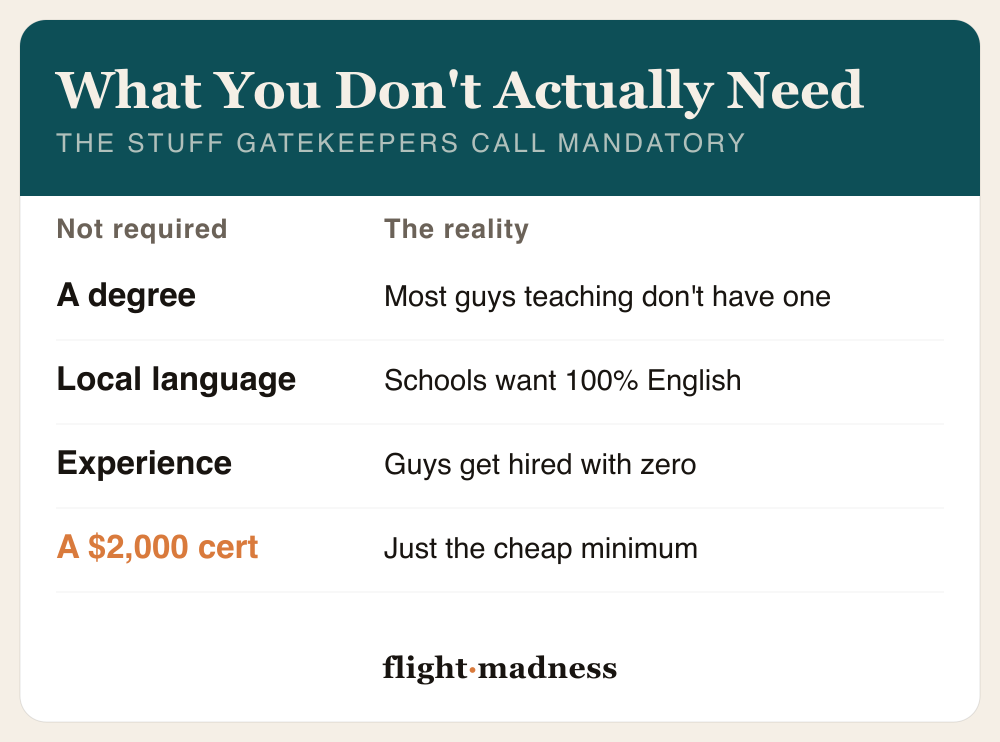
Here's the other thing the gatekeepers won't tell you: you don't need a degree to teach English. I say that as a guy who has an engineering degree, so I'm not knocking college. But a majority of people teaching English overseas don't have one, and I've helped guys with no degree and no teaching experience get job offers, often in under 30 days, a lot of them online.
You don't need to speak the local language either. The vast majority of schools want you speaking 100% English with the students. Most of the stuff people treat as mandatory just isn't.
The difference between the guys who get hired and the guys who don't usually isn't credentials. It's that one of them actually tried.
The Right Order (and the Slap in the Nuts)
The actual path I recommend: the country first, the school second, and the visa type third. And after that, then you can start thinking about certifications, if they're even necessary.
Because China is not Thailand. Thailand is not Colombia. Colombia is not Vietnam. These are different countries with different types of jobs and different requirements. If Thailand is your target, here's how to teach English in Thailand specifically, and here's what a decade of teaching English in China actually looked like.
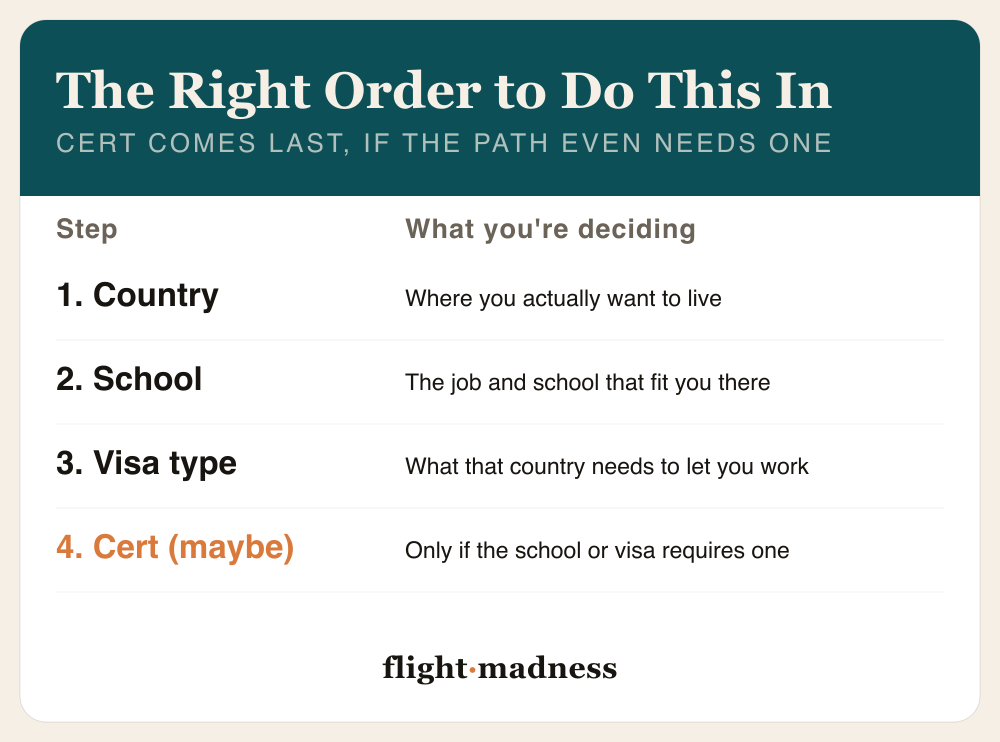
The real risk I see guys get caught in: they spend months studying for some overpriced TEFL certification just to find out they didn't actually need it in the first place. The final slap in the nuts is when you start applying for jobs and realize the schools didn't really care about your fancy TEFL course anyway.
What Schools Actually See
You got this book by Machiavelli, it's called The Prince. In it, he talks about how men judge things by how we see them. Perception is everything. A school judges by what's right in front of them, not by the stuff that takes digging to verify.
So think about what a school can actually see when you apply:
- Your passport
- Your resume, and the photo on it
- Your confidence and how you carry yourself
- How the interview goes, how you speak
- Whether you're somebody who gets along well with people
- Your demo class, where you prove you can actually teach students
Most schools are not deeply studying where you got your TEFL certification from. An American passport, clear English, and knowing how to communicate, that's what's really important. Most schools just want someone who's presentable, reliable, and can bring energy to the classroom.

You know what stands out more than a TEFL certificate? A strong voice. A natural smile. A good story. A little humor. A playful demo video beats a paper certificate any day. You can have a top-tier certification and still bomb the demo class, and if you bomb it, you're probably not getting the job.
Get the Free Quickstart Teaching Guide
The practical roadmap for using teaching to get overseas: which countries to look at, what the different jobs actually pay, and online vs in-person.
Free guide. Real information, not hype. Unsubscribe anytime.
A Real Scam Story
A client of mine told me he bought a 3-month certification program at a college in the UK. It was overpriced, almost $2,000, and that didn't even include the fee for books. Because it was in-person, he had to fight through traffic to attend every week. Basically, he got scammed by the college offering the program.
There are a lot of outfits out there fooling unsuspecting teachers into thinking they need these exaggerated, insanely lengthy courses. And if you finish, they try to upsell you on even more certifications. When a guy actually needs one, I point him to the right fast and inexpensive program, and I always recommend online options. That's the most efficient way to do your training these days.
Guys Getting Hired Without the Fancy Cert
My client Wesley put in around 30 applications and had a teaching job in Thailand after two or three weeks of applying. Nothing in his hiring story turned on a TEFL. Funny thing: Wesley is technically more qualified than I am to teach. My background is engineering. I don't even have a formal teaching background, and I've been doing this for over 12 years.
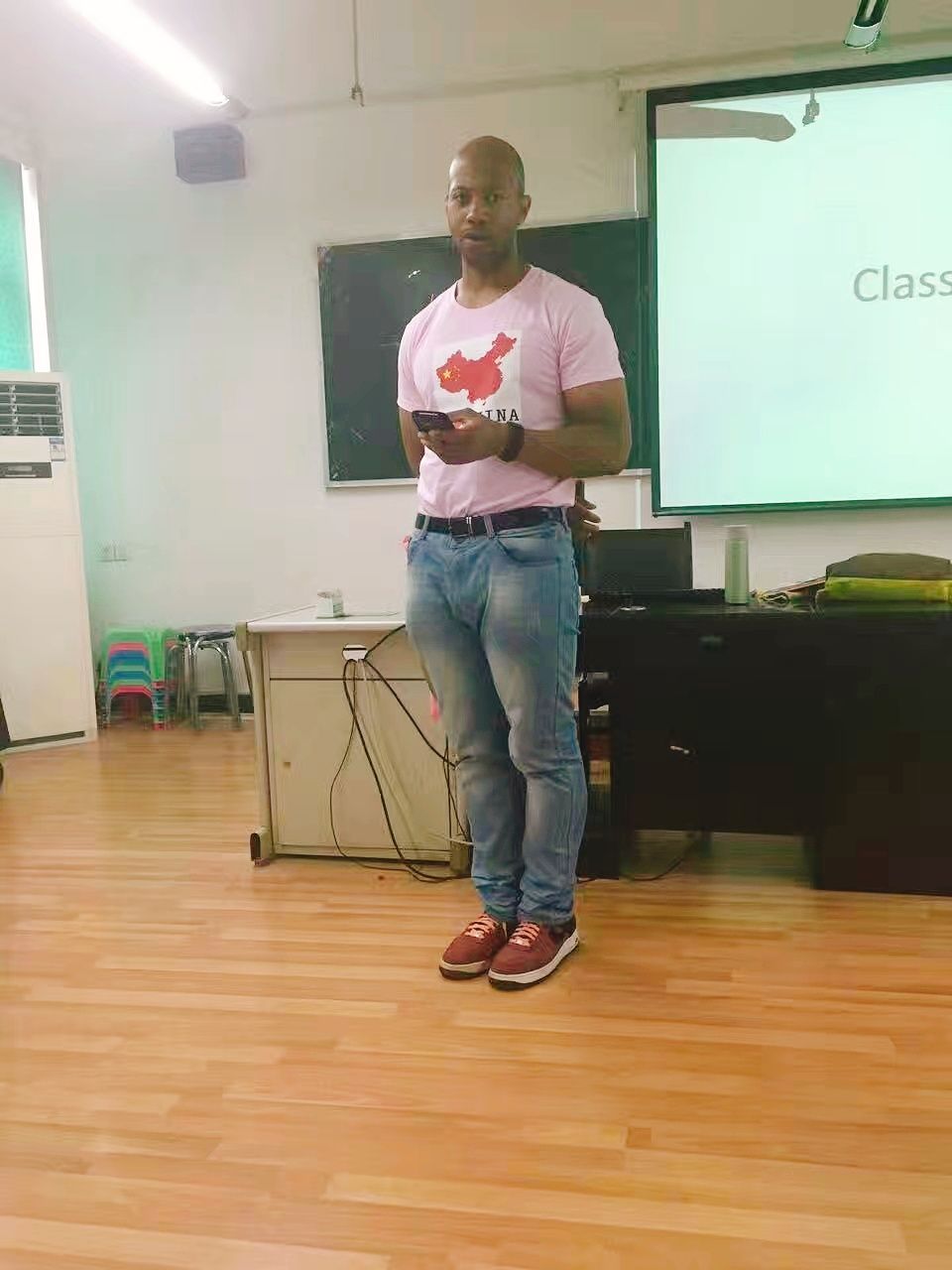
Another client of mine, James, got hired teaching online with my help. He was nervous going in, like most guys are, and he landed the job anyway.
And for honesty's sake, here's James's own take, in his words: "I believe it's better to learn to get the certification at home, and then come here." Fair position. If your path needs one, his route works fine: knock it out from home before you fly.
When Getting TEFL Certified Actually Makes Sense
Sometimes the school or the visa on your specific path requires one. Fine. Then you get the minimum required certification, fast and inexpensive, online. And plenty of the teaching gigs out there are degree-optional to begin with.
If you do need to get TEFL certified, keep it simple. Look at online TEFL courses that get it done without the premium markup. And remember what schools actually judge you on: the interview and the demo class, not the logo on your TEFL certificate. A higher-priced course isn't automatically better, and a school won't put it above a cheaper one.
What you don't do is spend months and multiple thousands of dollars on a premium course because an ad told you that's the professional move for teaching abroad. I've had a lot of guys come to me about to put down multiple thousands of dollars for some kind of TEFL certification, and I showed them they didn't need that to get overseas faster.
How to Pick a TEFL Course Without Getting Robbed
Say your path genuinely needs one. Here's how I tell guys to pick a TEFL course: keep it fast, keep it inexpensive, and get it online. A cheap online TEFL course that meets the requirement does the same job in a school's eyes as a $2,000 one. You're after the minimum required TEFL certification, not the fanciest TEFL certificate on the shelf.
What actually matters in a TEFL course
Look for a legit online TEFL course and keep it cheap. You do not need a three-month, thousand-dollar program to get certified. The priciest options win the top spot by paying for ads, not by getting you hired any faster.
Here's the honest truth: the certificate is paperwork. Get the cheap one if your path needs it, skip it if it doesn't, and put your energy into the interview and the demo class instead. That's what turns a certified teacher into a hired teacher, not the price tag on the course.
So What Does Teaching Actually Pay?
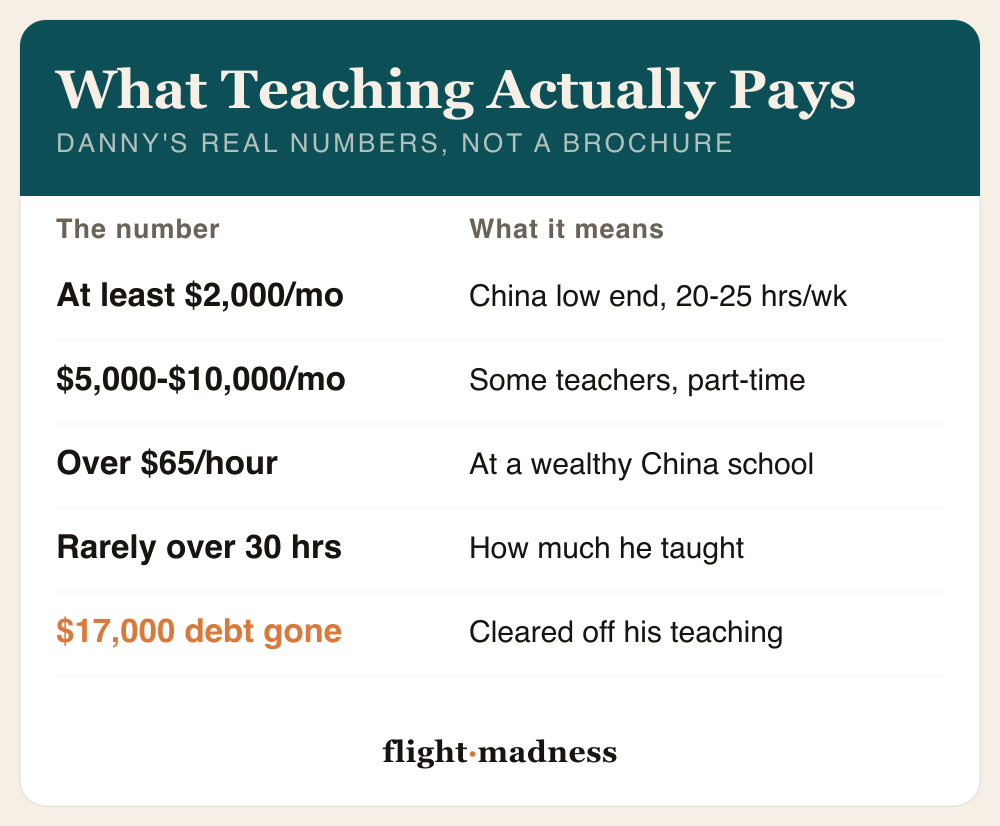
Here's where "is a TEFL worth it" really gets answered, because the question underneath it is "is the payoff worth it." In China, the low end of average teaching pay is around $2,000 a month working 20 to 25 hours a week, and there are teachers pulling $5,000 to $10,000 a month on part-time hours. One of my own classes paid me over $65 an hour. I cleared over $17,000 in student debt off teaching alone.
The gap is the whole game
The number that matters isn't the salary, it's the gap between what you earn and what life costs. Making $15 an hour hits completely different when your rent is a few hundred bucks. That gap is what buys the freedom, not a fancy certificate.
Online is where it compounds
Going online is what multiplied it for me. I tripled my teaching income doing online classes while basically working part-time. I open the laptop, teach for a while, and the money gets deposited. No expensive cert made that happen.
Teaching Is a Vehicle, Not the Destination
I've never pretended teaching is my passion. It's a vehicle, the fastest way for an American to get overseas with money coming in. Think of it as the MVP, the minimum viable product that gets you on the ground. It's the ticket that gets you through the door, not the whole trip.
Once you're over here with income handled, you expand. I used teaching to build my own products, run social media, and make travel content. Plenty of guys start out teaching and pivot into a business, online or brick-and-mortar. Teaching funds the life while you build the next thing, and none of that requires a premium cert.
But Won't AI Replace English Teachers?
I get this one a lot. My honest take: people learn English to speak with other humans, not with robots. There's almost no chance most students would rather practice with a machine than a real person. That's exactly why the job is safe.
The way I see it, AI mostly copies people who were easily replaceable to begin with. Put yourself in front of a class as a real, present human who brings some energy, and you're giving students the one thing a machine can't. So no, I wouldn't let the robot panic talk you out of it.
Start Teaching Online From the US
Here's the move I tell most guys: start teaching English online while you're still in the States. Now you've got income coming in before you even get on a plane. Then line up an in-person job so it's set when you land. That way you're not jumping to the other side of the world without a net.
The demo class is the real hurdle
Heads up for first-timers: a lot of online jobs want you to run a short practice class before they officially hire you. That demo, not the paperwork, is the part you really need to get right. Do well there and you give yourself a much better shot, cert or no fancy cert.
Map Your Path on a Free 15-Minute Call
If you're about to buy an expensive certification and you're not sure about the country, the path, or the type of jobs you're going to take, don't spin on it for months.
Get on a free 15-minute Get Overseas Strategy Call with me first. We'll map how you can use English teaching to get overseas, and I'll break down the steps so you're not doing things out of order. I've saved a bunch of guys serious money who were about to overpay for a cert they didn't even need.
Book My Free 15-Minute Strategy Call →Free. No pressure. Just a clear next step.
Frequently Asked Questions
Do you need a TEFL to teach English abroad?
A lot of the time it is not even required. It depends on the country, the school, and the visa type, in that order. Map those three first, then get a certificate only if your specific path actually calls for one. There are degree-optional teaching gigs out there, and plenty of guys land one without dropping thousands on a premium course.
How much does a TEFL certification cost?
The ones I warn guys about are the heavily marketed thousand-dollar and two-thousand-dollar courses, and I have watched guys get ready to put down multiple thousands. One client of mine paid almost $2,000 for a 3-month in-person program before we ever talked, and that did not even include the books. When a path genuinely needs a certificate, I point guys at fast, inexpensive online options instead.
What is a TEFL certification?
TEFL stands for Teaching English as a Foreign Language, a training certificate that some schools and some visas ask for. My take: TEFL, TESOL, whatever teaching certification you are looking at, the same rules apply. It is a piece of paperwork, not your escape plan.
Do schools check your TEFL closely?
Most schools do not dig into which provider issued your TEFL certificate. What they actually watch is the interview and the demo class, where you prove you can run a room full of students. Do badly there and no TEFL certification saves you. Do well and the cert matters a lot less than guys think.
Is an online TEFL course good enough?
For most guys, yes. I always point people at online TEFL courses: fast and inexpensive. A pricey in-person TEFL course is not necessarily any better in a school's eyes. If your path needs a TEFL certification, get the cheap online one that meets the minimum requirement and move on.
Do employers require a TEFL certification?
Plenty of the time it is not required at all. Most employers care more about your passport, the interview, and whether you can actually teach than about a certificate. Map the country, school, and visa first, then get a TEFL certification only if that specific path calls for one.